Is Instagram Safe
for My Child?
Instagram is a comparison machine disguised as a photo app. Whether your child is 12, 13, 14, or 16, the risks are different at every age — and so is what you can do about them. In October 2024, a US federal judge ruled Meta knowingly designed features that harm children. Your teenager is using a product its own maker was found liable for.
use Instagram
You have probably noticed something
You do not need to check every box. One is enough to know this page is for you.
Is Instagram safe for kids and teens? (2026)
No — not without parental supervision, and not at all under 13. Instagram's minimum age is 13. Since September 2024, teens 13–17 have been placed on Teen Accounts by default (private, restricted DMs, stricter content filters). But in October 2025, a Time Magazine investigation found Instagram was still recommending sexual, violent, and self-harm content to teen accounts — even with the new protections on.
Why Instagram Hits Harder Than You Think
Instagram is not just a photo-sharing app. It is a comparison engine optimised for engagement. The algorithm learns what triggers your teenager’s insecurities and serves more of exactly that. Meta’s own internal research, leaked in 2021, showed they knew Instagram made body image issues worse for 1 in 3 teen girls.
Other platforms are attention traps. Instagram is an identity trap. Your teenager is not just consuming content — they are performing for an audience, measuring their worth in likes, and comparing their unfiltered reality to everyone else’s curated highlight reel.
And in October 2024, a US federal judge ruled Meta knowingly designed features that exploit children. This is not a conspiracy theory. It is a legal finding.
How Instagram Changes Your Teenager
Instagram’s damage works through four mechanisms, each reinforcing the others. Understanding them changes the conversation from “just put the phone down” to “I see what you’re up against.”
Comparison Culture
Every scroll is a comparison. Filtered faces, curated lifestyles, highlight reels. Your teenager’s brain processes hundreds of social comparisons per session — most of them unfavourable. The Royal Society for Public Health ranked Instagram worst for young people’s mental health out of all major platforms.
Filter Bubbles
The algorithm learns what your teenager engages with — and feeds them more of the same. If they pause on body image content, they get more body image content. If they engage with drama, they get more drama. The feed becomes a mirror of their insecurities, not their interests.
Validation Addiction
Likes, comments, and follower counts create a quantified social hierarchy. Your teenager knows exactly where they stand — numerically. The dopamine hit from a like is real and measurable. The absence of likes triggers genuine anxiety. Instagram turned social approval into a scoring system.
Finstas — The Hidden Layer
Many teenagers run secondary “fake Instagram” accounts (finstas) where the real content lives. The main account is the performance; the finsta is where they post what they actually feel. The existence of a finsta is not inherently dangerous — but it tells you your teenager does not feel safe being authentic on their public account.
What the Data Actually Shows
Insights from Daniel’s 12 years working in London schools
Is My Teenager Addicted to Instagram?
Not every teenager who loves Instagram is addicted. But if it is causing regular distress, affecting self-image, disrupting sleep, or they genuinely cannot stop checking — these are warning signs. The key question: is Instagram enhancing their life or taking from it?
- Self-harm content or negative body image spirals
- Refusing to attend school due to online social dynamics
- Signs of eating disorder linked to comparison
- Contact with unknown adults via DMs
- Mood consistently drops after scrolling
- Obsessive checking — every few minutes, including overnight
- Withdrawing from family and real-life friendships
- Running secret accounts you did not know about
- Anxiety about likes, followers, or being unfollowed
- Uses Instagram socially but has other interests too
- Can put the phone down when asked without major distress
- Open about what they see and who they follow
- Mood stable before and after use
How Do I Set Up Instagram Parental Controls?
Instagram’s Family Center gives you genuine oversight — but most parents do not know it exists. Teen Accounts (launched 2024) add automatic protections for under-16s. These controls are essential but they handle about 5% of the problem. Understanding what Instagram does to your teenager is the other 95%.
Open Family Center
Go to Settings → Supervision → Family Center. Link your account to your teen’s — they will receive a request to accept.
Enable Teen Account Restrictions
For under-16s, ensure Teen Account is active. This restricts DMs from non-followers, hides sensitive content, and enables quiet mode overnight.
Set Daily Time Limits
In Family Center, set a daily time limit. When reached, Instagram shows a reminder. Your teen can dismiss it — but you will see how long they actually spend.
Activate Quiet Mode
Enable Quiet Mode during sleep hours (e.g. 9pm to 7am). Silences notifications and sends auto-replies to DMs. This is the single most impactful setting for sleep.
Review Followers and Following
Family Center lets you see who follows your teen and who they follow. Review regularly — not to spy, but to ensure no unknown adults have gained access.
Set Account to Private
Ensure the account is Private. Only approved followers can see posts and stories. Teen Accounts are private by default — check it has not been changed.
What Age Should My Child Use Instagram?
Instagram’s minimum age is 13, but developmental research suggests 15–16 is more appropriate. The comparison mechanics hit hardest during early adolescence when identity is still forming. The question is not just “can they use it?” but “can they handle what it does to them?”
Age is a number. What matters more: can your teenager handle seeing curated perfection without internalising it? Can they put the phone down? Do they have enough real-world identity to withstand the comparison machine? If you are not sure — the answer is not yet.
The age recommendations above are general guidelines. What actually works depends on:
- Your teen's maturity — not just their birthday. Some 13-year-olds handle Instagram better than some 16-year-olds.
- What's already happened — Prevention looks different from intervention. If Instagram is already affecting their mental health, you need a different approach.
- Whether they have ADHD or anxiety — The comparison and validation cycle hits neurodivergent teens and those prone to anxiety much harder. Standard advice often makes things worse.
- Your family's communication style — Rules that work for some families backfire in others. One-size-fits-all does not exist.
Instagram's infinite scroll and instant feedback loop can be particularly harmful for teens with ADHD — the constant novelty triggers dopamine in ways that make stopping exceptionally difficult. For teens with anxiety, the comparison culture and fear of missing out amplifies existing struggles. I spent 12 years working with neurodivergent children in schools — the standard advice does not apply. This is exactly what I help with.
More from the Social Media Series
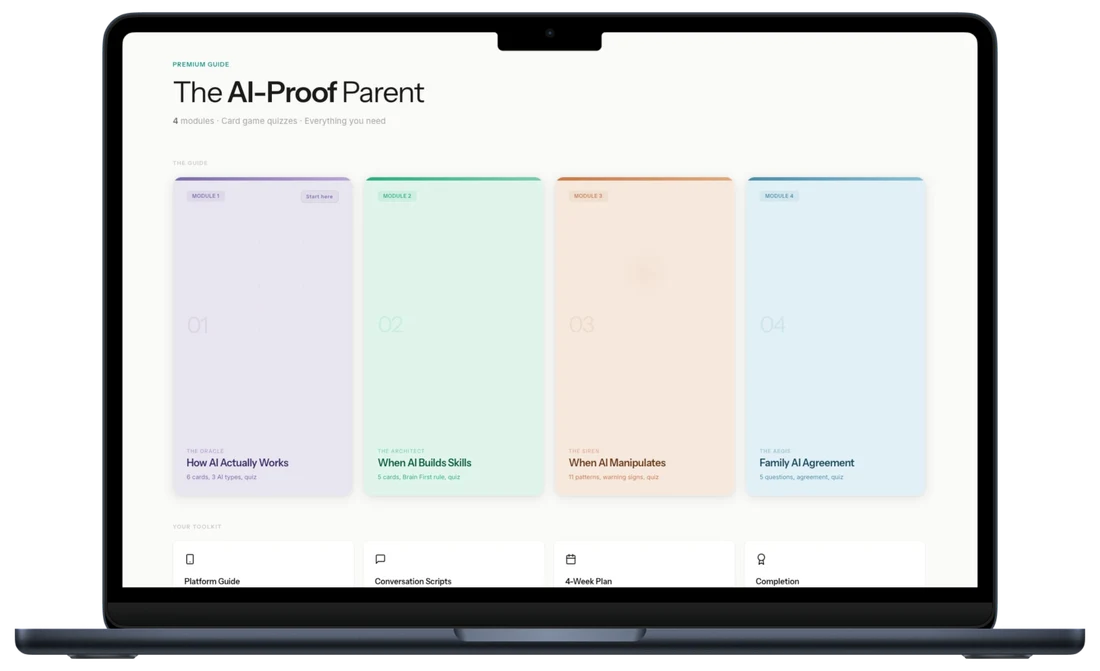
Instagram uses AI to optimise every feed, every recommendation, every notification. This guide breaks down exactly how AI-driven platforms manipulate your child — and gives you the conversations, the settings, and the plan to take back control.
Want personalised help instead?
The guide gives you the system. A session gives you a plan built around your teenager, your family, and your specific situation. One call. 45 minutes. Everything changes.
Your Questions Answered